Midea Dehumidifier Review: Is It Worth Your Money In 2026?
Damp air can make any room feel uncomfortable. It can also damage walls, furniture, and your health. That is where a Midea dehumidifier steps in to help.
Midea builds these units in house. This means better quality control than many competitors who outsource production.
Their lineup ranges from the compact Cube 20 pt to the powerful Cube 50 pt. Each model targets different room sizes and needs.
You get ENERGY STAR certification across the range. This means real energy savings without sacrificing performance.
Smart features like Wi-Fi app control and built-in pumps add convenience. Quiet motors and smooth wheels make daily use simple too.
But no product is perfect. Some users report warranty issues and reliability concerns.
This review breaks down everything you need to know. We will cover specs, performance, pros, and cons. By the end, you will know if a Midea dehumidifier fits your home.
In a Nutshell
Here’s the quick lowdown on what you need to know:
-
Reliable performance for most homes. The Cube 20 pt fits smaller spaces while the Cube 50 pt handles larger areas with ease.
-
Energy efficiency stands out. Every model carries ENERGY STAR certification, so you save on power without sacrificing results.
-
Portability is a real plus. Four wheels let you move these units room to room without much effort.
-
Smart features add convenience. Wi Fi app control means you can adjust settings from your phone, and the built in pump option skips manual draining.
-
Some users report issues. A few buyers noted failures within months of use, and customer service responses were mixed.
-
Built for home use only. These dehumidifiers work well in residential settings but aren’t made for commercial spaces.
-
Overall, a solid choice. Midea delivers strong efficiency and smart features, though reliability varies from one unit to the next. Weigh the pros against the cons before you decide.
Dehumidification Capacity and Coverage
The Cube 20 pt model handles spaces up to 1,500 square feet. This size works well for bedrooms, small living rooms, or offices. It removes 20 pints of moisture daily, which is solid for moderate humidity problems.
If you need more power, the Cube 50 pt model steps up significantly. It covers 4,500 square feet and pulls 50 pints of water daily. This larger unit suits basements, whole floors, or commercial spaces that demand serious dehumidification.
Coverage matters for your results. A unit that’s too small won’t keep humidity down. A unit that’s too large wastes energy. Midea’s two main options let you match capacity to your actual space. The 20 pint model fits most standard homes. The 50 pint model handles larger properties or very damp conditions.
The Cube 50 pt includes a built-in pump. This feature drains water automatically instead of requiring manual bucket emptying. You can set it to run continuously without stopping to empty. The 20 pt model lacks this pump, so you’ll need to empty the tank regularly or use a gravity drain setup.
Humidity control is adjustable on both models. You can set the target humidity as high as 85 percent. Lower settings (around 45 to 50 percent) give you more comfortable air. The unit works until it reaches your chosen level, then cycles on and off as needed.
Midea rates these units for residential use only. They’re not designed for industrial or commercial applications. This means they work best in typical homes, apartments, and small offices.
Portability helps placement flexibility. Both models come with four wheels, so you can move them between rooms. This matters if you need to treat different areas at different times. You can roll the dehumidifier where moisture problems are worst.
The actual dehumidification performance depends on room temperature and initial humidity levels. Warmer, more humid spaces may require the larger unit even if your square footage suggests otherwise. Midea’s specs give you a starting point, but your specific conditions will determine which model truly fits your needs.

- 4,500 SQ. FT. DEHUMIDIFIER – Removes up to 50 pints of moisture per day with an adjustable humidity setting...
- ULTRA QUIET OPERATION – This model has quiet operation as 49 dBA(low mode). Enjoy sleep, a good book, or...
- SMART CONTROL -This dehumidifier is Wi-Fi enabled and can be controlled from anywhere through the cloud using...

Last update on 2026-10-24 / Affiliate links / Images from Amazon Product Advertising API
Design, Portability, and Build Quality
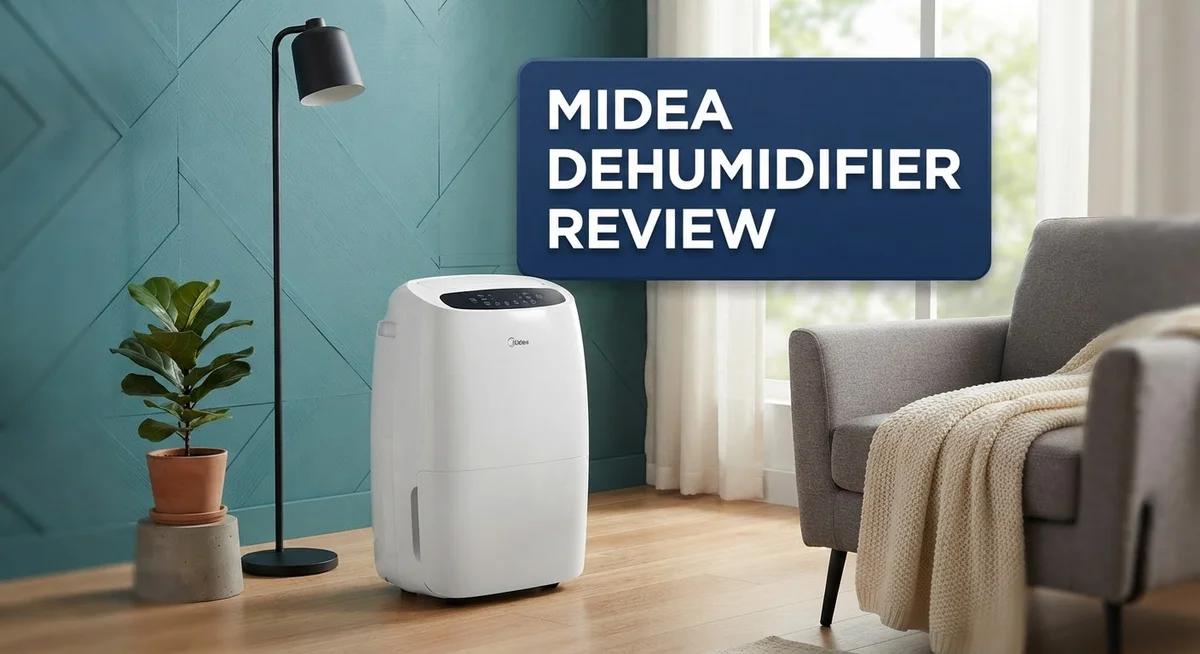
Midea’s dehumidifier lineup shows thoughtful engineering in how these units move and feel in your home. The cube design keeps things compact and modern looking. White finish works with most room decor without standing out awkwardly.
Both the 20 pint and 50 pint models roll smoothly on four wheels. This means you can slide them from your bedroom to your basement without struggling. The wheels lock in place so the unit stays put once you position it. Portability matters when humidity problems shift between seasons or rooms.
The build quality reflects Midea’s in house manufacturing approach. You get solid plastic construction that feels sturdy when you move it around. The control panel sits on top, making adjustments easy without bending down. Water bucket placement is accessible for emptying on the 20 pint model.
The 50 pint model adds a built in pump. This feature means water drains continuously instead of filling a bucket you must empty manually. The pump reduces your maintenance work significantly. Hose connection is straightforward for most users.
Size differences matter for placement. The 20 pint fits smaller spaces like bedrooms or offices. The 50 pint takes up more floor space but handles larger areas. Check your doorways and hallways before buying to ensure it fits through tight spots.
Noise levels stay reasonable during operation. You won’t hear loud mechanical grinding or rattling. The fan runs at a manageable volume for living spaces.
Weight considerations come into play if you move units frequently. Heavier models require more effort to position. The wheels help, but you should still check the specs if stairs are involved.
Overall, Midea prioritizes practical design. The cube shape maximizes interior space while minimizing footprint. Four wheels and accessible controls show attention to user needs. The optional built in pump on the 50 pint model eliminates a common hassle. These design choices make daily operation straightforward and keep the units functional in various home settings.
Energy Efficiency and Operating Costs
Energy efficiency directly impacts your wallet over time. Midea’s dehumidifiers carry ENERGY STAR certification, which means they meet strict efficiency standards set by the EPA. This matters because a dehumidifier runs for many hours each day or week depending on your humidity levels.
The Cube 20 pt model uses less power than larger units since it handles smaller spaces up to 1,500 square feet. If you run this model continuously, your electricity consumption stays moderate. The Cube 50 pt model draws more power due to its higher capacity, but it covers up to 4,500 square feet, so the energy per square foot remains reasonable.
Built-in pumps affect operating costs too. The 50 pint model includes an automatic pump that drains water without your help. You won’t need to empty buckets manually, which saves time and effort. Manual bucket drainage on the 20 pint model requires more attention but doesn’t add electricity costs.
Humidity settings influence energy use significantly. Both models let you adjust the target humidity up to 85 percent. Setting a higher humidity level means the dehumidifier runs less often, reducing electricity consumption. Lower humidity targets require more frequent operation and higher energy usage.
Smart control features on Wi-Fi enabled models let you monitor and adjust settings remotely. You can turn the unit off when you leave home or adjust humidity levels without being present. This flexibility helps prevent unnecessary operation and lowers your overall energy bills.
Room size matching matters for efficiency. Using the 20 pint model in a small bedroom wastes less energy than running the 50 pint unit in the same space. Conversely, an undersized unit works harder and longer to reach your humidity target, consuming more power.
Real world operating costs depend on several factors: how often you run the unit, your target humidity level, and your local electricity rates. ENERGY STAR certification gives you confidence that Midea models perform better than standard alternatives, keeping long term expenses down while maintaining effective moisture control.
Top 3 Alternatives
Frigidaire Dehumidifier

- Wi-Fi Enabled: Effortlessly control your dehumidifier from anywhere with the Frigidaire app or connect it to...
- Energy-Efficient Performance: This Energy Star-certified dehumidifier uses less energy to deliver powerful...
- Convenient Drainage Options: Choose between two hassle-free water drainage methods – use the easy-carry...
Last update on 2026-10-24 / Affiliate links / Images from Amazon Product Advertising API
Frigidaire offers a solid option for those seeking moisture control in their homes. This unit removes water from the air efficiently and works well in medium to large rooms. The compact design makes placement simple in bedrooms, basements, or living areas.
The machine operates quietly, so you won’t hear constant noise during the day or night. Many users appreciate the automatic shut-off feature when the water tank fills up. You simply empty the tank and restart. Some models include a continuous drain option for hands-free operation.
hOmeLabs Dehumidifier

- Compact Moisture Control – This Wi-Fi enabled dehumidifier removes up to 8 pints per day at 80°F, 60%RH...
- Space-Saving & Ultra-Quiet – Designed for small spaces, this 38dB whisper-quiet dehumidifier keeps humidity...
- Hassle-Free Drainage – Includes a 3.3ft drain hose for continuous drainage, so you never have to empty the...
Last update on 2026-10-24 / Affiliate links / Images from Amazon Product Advertising API
hOmeLabs provides an affordable solution for moisture problems. This dehumidifier features easy-to-use controls and a digital display that shows humidity levels clearly. The unit pulls moisture from the air steadily and handles rooms of various sizes.
The tank capacity works well for daily use, and the automatic shut-off function prevents overflow. The lightweight frame allows you to move it between rooms without difficulty. Energy efficiency is a key selling point, helping reduce electricity bills over time.
Pro Breeze Dehumidifier

- SMALL & COMPACT: Our lightweight and portable dehumidifier for home is capable of removing up to 9 ounces of...
- SAFE AUTO SHUT OFF: Our dehumidifiers for bedroom are ideal in small spaces and rooms. When full, the...
- ULTRA QUIET & EFFICIENT: Get the best of your dehumidifier for home and experience Whisper Quiet Operation in...
Last update on 2026-10-24 / Affiliate links / Images from Amazon Product Advertising API
Pro Breeze delivers strong performance in moisture removal. This model includes a quiet motor that runs smoothly without disruption. The unit works effectively in bedrooms, offices, and basements where humidity causes discomfort.
The machine features straightforward operation with minimal setup required. The water tank empties easily, and the automatic shut-off protects against overflow situations. Durability stands out as a strength, with many users reporting long-term reliability. The design fits naturally into most room settings without looking out of place.
Smart Controls and Automation Features
Midea’s smart control features bring convenience straight to your fingertips. The Wi-Fi enabled models let you manage your dehumidifier from anywhere using a smartphone app.
You can turn the unit on or off remotely without being in the room. This matters when you’re away from home and want to start the dehumidifier before you arrive. The app also shows you real time humidity levels so you know exactly what’s happening indoors.
Automation scheduling is a key benefit here. You set specific times for the unit to run automatically each day. This means the dehumidifier works when you need it most, like early morning or late evening, without you having to remember to flip a switch.
The humidity sensor works continuously to monitor moisture levels. When humidity rises above your set point, the unit kicks in automatically. Once the target humidity is reached, the dehumidifier powers down to save energy. This automatic cycling keeps your space comfortable without constant manual adjustments.
Control panels on both models are straightforward to use. Buttons are clearly labeled and the display shows your current settings at a glance. You don’t need technical skills to operate these units.
Integration with smart home systems matters for some users. The Wi-Fi connectivity allows the dehumidifier to work alongside other smart devices in your home. You can create routines that trigger multiple appliances together if needed.
Real time alerts notify you when the water bucket is full or when the unit needs attention. This prevents overflow issues and keeps maintenance simple. You’ll know immediately if something requires your action.
The 50 pint model’s built in pump adds another automation layer. Water drains continuously without manual bucket emptying, so the unit runs longer between interruptions. Combined with smart controls, this creates a nearly hands off experience.
Midea keeps the interface intuitive so anyone in your household can adjust settings. No complicated menus or confusing options clutter the experience. Smart features enhance convenience rather than complicate daily use.
Noise Level and User Experience
Midea dehumidifiers operate at sound levels that won’t disturb your daily routine. The Cube models produce noise in the 45 to 50 decibel range during standard operation. This falls between a quiet office and normal conversation, making them suitable for bedrooms and living spaces.
The fan speed directly affects noise output. Lower settings run quieter than maximum capacity. You can adjust the unit to match your comfort level, whether you’re sleeping or working from home. Most users report the sound becomes background noise after a few minutes of adjustment.
Portability enhances the user experience significantly. Both the 20 pint and 50 pint models feature four smooth rolling wheels. You can move units between rooms without straining your back or calling for help. The wheels glide across hardwood, tile, and carpet with minimal effort.
Water management impacts daily convenience. The 20 pint model uses a standard bucket system. You empty it manually when full. The 50 pint model includes a built-in pump, which automatically drains water to a nearby sink or window. This eliminates repeated trips to empty buckets and reduces your hands-on maintenance time.
Control interfaces stay simple and intuitive. Buttons and displays are clearly labeled. Anyone in your household can operate the unit without confusion. Wi-Fi enabled models let you monitor humidity levels from your smartphone, even when you’re away from home.
Humidity sensors work continuously throughout operation. They detect moisture changes and adjust the unit’s performance automatically. Real-time alerts notify you when attention is needed. The adjustable humidity range goes up to 85 percent, giving you flexibility for different seasons and preferences.
Reliability concerns exist based on user reports. Some owners experienced issues after 2 months of use. Warranty and customer service responses have drawn complaints from certain users. This inconsistency affects the overall user experience and long-term satisfaction.
Setup takes minimal time. Units arrive ready to plug in and operate. No complex installation or professional setup is required. The straightforward design means you start dehumidifying your space within minutes of unboxing.
Pros and Cons
Pros
- ENERGY STAR certified models reduce electricity consumption compared to standard dehumidifiers
- Manufactured in-house rather than outsourced, which Midea highlights as a quality advantage
- Four wheel design makes moving between rooms quick and effortless
- Wi-Fi enabled models let you monitor humidity levels and adjust settings from your phone
- Built in pump option on the 50 pint model eliminates manual water bucket emptying
Cons
- Warranty support and customer service responses have disappointed some buyers based on reported experiences
- Several users report the units fail within two months of purchase, raising durability questions
- Only suitable for homes and residential spaces, not commercial or industrial applications
- Mixed satisfaction ratings suggest performance varies significantly between individual units
Who Should Buy It
Midea dehumidifiers work best for homeowners dealing with moisture problems in specific spaces. If you have a basement, bedroom, or bathroom that feels damp, these units address that issue directly.
The 20 pint model suits smaller areas. You should consider it if you need coverage for up to 1,500 square feet. Apartments, bedrooms, and small basements fall into this category. This model works well when you want something compact and easy to move around your home.
The 50 pint model handles larger spaces effectively. Pick this one if your basement or main floor spans up to 4,500 square feet. Families with bigger homes benefit from the extra capacity and built in pump. You won’t need to empty water buckets as often since the pump drains water automatically.
Smart home enthusiasts should focus on Wi-Fi enabled models. If you want to check humidity levels from your phone or adjust settings remotely, these features matter to you. Automation scheduling lets you set the unit to run during specific times. Real time alerts notify you when maintenance is needed.
People who value energy efficiency appreciate Midea’s ENERGY STAR certification. Your electricity bills stay lower compared to standard dehumidifiers. This matters if the unit runs constantly during humid seasons.
Buyers who prioritize quiet operation find Midea units appealing. These dehumidifiers won’t interrupt conversations or disturb sleep. The fan speed adjusts automatically based on humidity levels.
You should know that some users report durability concerns. A small number experienced failures within two months of purchase. Warranty support responses have disappointed certain customers. Research current user reviews before deciding.
Consider Midea if you need reliable moisture control in residential spaces. The portability helps you move the unit between rooms easily. Four wheels make repositioning simple. Control panels stay straightforward, so anyone in your household can adjust settings without confusion.
Skip Midea only if you need commercial grade equipment or expect premium warranty support. For standard home moisture problems, these dehumidifiers deliver solid performance.
Final Verdict
Midea dehumidifiers deliver solid performance for everyday home use. They tackle moisture problems without complicating your life. Most households find these units meet their basic needs well.
The brand’s energy efficiency stands out as a genuine strength. You get effective moisture control without excessive electricity bills. This matters for anyone running a dehumidifier for long stretches.
Durability remains the biggest question mark here. Some buyers report units failing early. Others use their Midea dehumidifier for years without issues.
This split experience means you should weigh your risk tolerance. If you want dependable moisture control for typical residential spaces, Midea fits the bill. The technology works well when units perform as expected.
Customer service gaps are worth noting too. Response times and warranty support have frustrated some users. This could matter if you experience problems down the road.
Think about your specific situation before deciding. Someone with a small basement differs from someone managing a large living area. Match the model size to your actual square footage needs.
Wi-Fi connectivity adds convenience for tech savvy households. You can monitor and adjust settings remotely. This feature enhances daily use without adding complexity.
The 50 pint model with its built-in pump offers the most hands-off experience. You avoid manual water disposal entirely. This convenience factor shouldn’t be underestimated for busy households.
Overall, Midea earns a recommendation for standard home dehumidification needs. The pros outweigh the cons for most residential users. Energy efficiency and portability make daily use simple.
Just temper your expectations around long term reliability and customer support. Some units will outperform others due to manufacturing variance. This is common across many appliance brands, not just Midea.
Choose Midea if you need practical, energy efficient moisture control. Look elsewhere only if commercial grade reliability or premium support matters most to you. For typical home use, Midea delivers good value through solid performance and thoughtful features.
Frequently Asked Questions
Can a Midea dehumidifier work in my bedroom?
Yes. Midea units operate quietly, so they work well in bedrooms. The 20 pint model suits smaller bedrooms. Larger master bedrooms benefit from the 50 pint model.
Noise levels stay low during operation, which means you can sleep without constant humming sounds. Many users report peaceful nights with Midea running.
Which Midea model should I choose for my home size?
Pick the 20 pint model for spaces up to 1,500 square feet. Choose the 50 pint model if your home exceeds 1,500 square feet or you have multiple damp areas.
The 50 pint version includes a built-in pump. This feature lets water drain automatically without emptying buckets manually. The 4-wheel design makes moving either model between rooms simple.
Does Midea offer smart home features?
Some Midea models include Wi-Fi connectivity. These units let you monitor humidity and adjust settings through a smartphone app.
Smart control adds convenience for busy households. You can check moisture levels from work or adjust settings before arriving home. Standard models work without Wi-Fi if you prefer manual controls.
What should I know about Midea’s reliability?
Midea units carry ENERGY STAR certification and generally perform well for everyday use. However, some buyers report failures within two months of purchase.
Warranty support has disappointed certain customers. Before buying, understand that long-term durability remains uncertain for some units. Residential use only is recommended. Your experience may vary based on individual unit quality.

DK is a tech enthusiast and home improvement expert who helps readers navigate the ever-evolving world of home technology and appliances. With a passion for smart living and practical innovation, DK provides honest reviews and expert guidance to make your home more comfortable, efficient, and modern.