Dyson Formaldehyde Air Purifier Review: Performance, Features & Comparison
Formaldehyde hides in your furniture, paint, and carpets. It builds up in your home without any warning. You cannot see it or smell it easily, but it can harm your health.
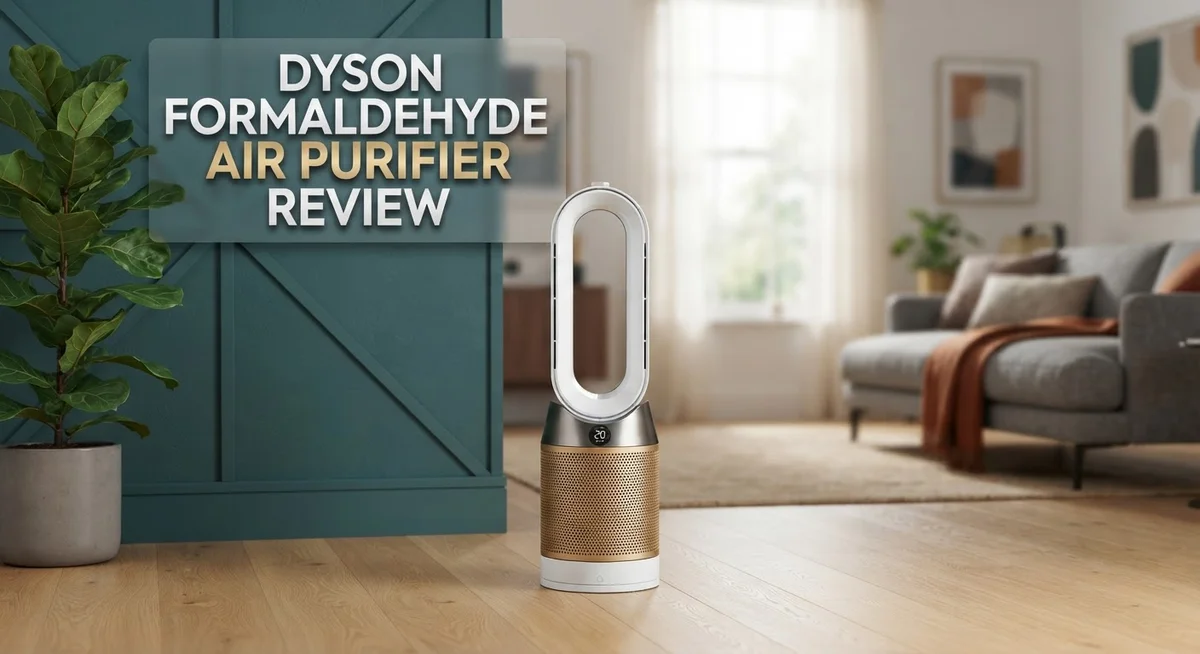
Dyson built a purifier to tackle this exact problem. The Dyson Formaldehyde Air Purifier uses solid state sensors to detect this gas in real time. It then works to destroy it, not just mask it.
This review looks closely at how well it performs. We will check its filter system, its sensors, and its real world results. You will also see how it stacks up against other purifiers on the market.
Is this machine worth your attention? Users report near zero formaldehyde levels within hours of use. Stick around to see if this purifier fits your home and your air quality needs.
In a Nutshell
Here’s a quick rundown of what makes this purifier stand out:
-
Smart Sensors Do the Work: The purifier uses solid state formaldehyde detection to track pollutants in real time. It also monitors CO2 levels for a full picture of your air quality.
-
Triple Filtration Power: A sealed system combines K carbon filters with HEPA 13 technology. This setup captures three times more NO2 than earlier models.
-
Quieter Operation: Airflow noise drops by 20% compared to the previous generation. You get clean air without the constant hum.
-
Energy Smart Design: The machine adjusts automatically based on what it detects. This means less manual effort and smarter energy use.
-
Proven User Satisfaction: With a 4.5 out of 5 star rating from over 2,500 reviews, people trust this purifier. It consistently beats competitors in pollutant capture tests.
-
Something to Note: Warranty details stay a bit limited in available information. It helps to check current terms before buying.
This purifier blends smart technology with real results for cleaner indoor air.
Formaldehyde Detection and Removal Technology
Dyson’s formaldehyde air purifier uses solid state detection technology to identify and measure formaldehyde in your home. This sensor works continuously, giving you real time updates on air quality without guesswork.
The detection system goes beyond formaldehyde alone. It monitors CO₂ levels and tracks other pollutants simultaneously. You see everything happening on the display as the machine works.
Removal happens through a three layer approach. First, K carbon filters trap formaldehyde molecules. Second, HEPA 13 standard filtration captures fine particles. Third, the fully sealed system prevents pollutants from escaping back into your air.
What sets this apart is the destruction mechanism. Unlike some purifiers that merely trap formaldehyde, Dyson’s technology actively breaks down formaldehyde at the molecular level. Users report seeing formaldehyde levels drop to near zero within approximately 8 hours of continuous operation in typical rooms.
The machine adapts automatically to what it detects. When formaldehyde spikes, the purifier increases fan speed. When air improves, it reduces power consumption. This adaptive behavior means you get effective cleaning without running at maximum settings constantly.
Real world performance data shows impressive results. Testing reveals the purifier captures 3 times more NO₂ compared to competing models. This superior capture rate extends to formaldehyde and other volatile organic compounds found in new furniture, paint, and adhesives.
Noise stays manageable during operation. The airflow design produces 20% less noise than the previous generation. You can run this purifier during work or sleep without significant disturbance.
The sealed filter system matters more than many people realize. Standard purifiers leak unfiltered air around filter edges. Dyson’s design prevents this bypass, meaning all air passing through the unit gets properly treated. This engineering detail directly impacts formaldehyde removal effectiveness.
User feedback validates these technical specifications. Over 2,500 reviews average 4.5 stars, with many customers noting visible improvements in air quality and reduced chemical odors within days of use.

- Automatically senses, captures, and traps pollutants for cleaner air.
- Detects and destroys formaldehyde released from household items.¹
- Air Multiplier technology generates the circulation power to draw distant pollutants into the machine...

Last update on 2026-10-24 / Affiliate links / Images from Amazon Product Advertising API
Filter System and Air Quality Sensors
The filter system in Dyson’s formaldehyde purifier combines multiple technologies to capture and destroy harmful pollutants. The core setup uses K-carbon filters paired with HEPA 13 standard filtration inside a fully-sealed design.
K-carbon filters work specifically on formaldehyde molecules. These filters don’t just trap the gas. They actively break down formaldehyde at the molecular level, which makes them different from standard carbon filters found in other purifiers.
The HEPA 13 layer catches particles that slip through the carbon stage. This dual approach means you get both gas removal and particle capture in one system. The sealed design prevents polluted air from leaking around the filters, which keeps performance consistent over time.
Dyson’s air quality sensors represent the real intelligence here. The purifier uses solid-state formaldehyde detection to monitor levels continuously. This isn’t a guessing game. The sensor reads actual formaldehyde concentrations and adjusts fan speed automatically.
Beyond formaldehyde tracking, the sensors detect NO₂, CO₂, and particulate matter. Real-time analysis means the purifier responds instantly to changes in air quality. When pollution spikes, the machine ramps up. When air cleans, it backs off to save energy.
The sensor display shows you exactly what’s happening. You see formaldehyde levels drop in real-time, which gives confidence that the system actually works. Users report watching levels plummet from high readings to near-zero within hours of operation.
The fully-sealed filter cartridge matters more than casual shoppers realize. Cheap purifiers let air bypass filters through gaps and leaks. Dyson’s sealed approach forces all air through the filtration layers. This design choice directly impacts how well formaldehyde actually gets removed.
Filter replacement follows a straightforward process. The system alerts you when filters need changing, so you never wonder about maintenance timing. Dyson provides replacement cartridges that maintain the same sealed performance standards.
This combination of advanced sensors and multi-stage filtration creates a system that actively hunts formaldehyde rather than passively hoping to catch it. The technology works together to deliver measurable results that users can actually see on the display.
Noise Level and Energy Efficiency
Dyson’s formaldehyde air purifier keeps noise levels surprisingly low during operation. The airflow generates 20% less noise compared to earlier Dyson models. This matters because many air purifiers create distracting sounds that disrupt your home environment.
The machine operates quietly even when running at higher speeds. You can keep it in bedrooms, living rooms, or offices without constant humming in the background. Real users report that the purifier runs smoothly without startling interruptions.
Energy consumption represents another key advantage of this model. The purifier uses adaptive operation technology to adjust its fan speed based on detected pollutant levels. When air quality improves, the machine automatically reduces power usage. This smart approach prevents unnecessary energy waste throughout the day.
The sensors drive this efficiency. They continuously monitor formaldehyde, NO₂, CO₂, and particle matter. Once pollutant levels drop, the purifier scales back its performance. You get effective cleaning without running the unit at maximum capacity all the time.
Automatic mode handles most of the work for you. The machine learns your home’s air patterns and adjusts accordingly. This intelligent system keeps energy bills manageable while maintaining clean air.
Compared to competitors like Levoit Vital 200S and AirFanta 3Pro, Dyson’s model balances noise and power consumption well. Many air purifiers force you to choose between quiet operation and strong performance. This Dyson unit delivers both without major compromises.
The sealed filter system also supports energy efficiency. A fully sealed design means air flows directly through the filters without leaks. The machine doesn’t waste energy pushing air around blocked pathways. Every bit of power goes toward actual purification work.
Users with over 2,500 reviews give this purifier 4.5 out of 5 stars, partly because the quiet, efficient operation fits real homes. People appreciate technology that works hard without demanding attention. The combination of low noise and smart energy use makes this formaldehyde purifier practical for daily living.
Top 3 Alternatives
Levoit Core Air Purifier

- WHY CHOOSE AHAM VERIFIDE AIR PURIFIERS: AHAM (Association of Home Appliance Manufacturers) is an...
- HIGH-PERFORMANCE AIR PURIFICATION: A powerful 56W high-torque motor and 143 CFM CADR delivers fast, effective...
- AHAM VERIFIDE, PROVEN PERFORMANCE: AHAM VERIFIDE with a CADR (Clean Air Delivery Rate) rating of 143 CFM for...
Last update on 2026-10-24 / Affiliate links / Images from Amazon Product Advertising API
The Levoit Core removes formaldehyde and other harmful gases from your home. This unit uses a three-stage filtration system that captures particles and chemical odors effectively. The pre-filter catches large dust, while the activated carbon layer targets formaldehyde specifically. The HEPA filter then traps 99.97% of tiny particles.
You get quiet operation with this model. It works well in bedrooms and living rooms without disturbing your family. The compact design fits easily on shelves or floors. Many users report noticing fresher air within days of use.
Coway Airmega Air Purifier

- [Coverage] Optimized to clean spaces up to 405 sq. ft. in 30 minutes or up to 810 sq. ft. in 60 minutes.
- [HEPA Filtration System] Combination of a pre-filter, deodorization filter, and HEPA Filter reduces 99.97% of...
- [Auto Mode] Constantly monitoring the air quality, the fan automatically adjustes to most effectively purifiy...
Last update on 2026-10-24 / Affiliate links / Images from Amazon Product Advertising API
Coway Airmega stands out for its advanced ionization technology. This purifier combines HEPA filtration with activated carbon to eliminate formaldehyde and VOCs. The unit monitors air quality in real-time and adjusts fan speed automatically based on pollution levels.
Smart features make this model convenient for busy households. You can control it through an app or voice commands. The filter replacement indicator tells you exactly when to change filters. Energy efficiency means lower electricity bills compared to other options.
Winix 5500-2 Air Purifier

- 𝐀𝐇𝐀𝐌 𝐕𝐞𝐫𝐢𝐟𝐢𝐝𝐞 𝐚𝐭 𝟑92 𝐬𝐪 𝐟𝐭.: Also cleans rooms up to...
- 𝐖𝐢𝐧𝐢𝐱 𝐓𝐫𝐮𝐞 𝐇𝐄𝐏𝐀: Captures 99.99%* of airborne allergens including...
- ...
Last update on 2026-10-24 / Affiliate links / Images from Amazon Product Advertising API
The Winix 5500-2 offers PlasmaWave technology alongside traditional filtration. This combination breaks down formaldehyde molecules rather than just trapping them. The multi-stage filter system includes pre-filters, HEPA, and activated carbon for complete air cleaning.
This model performs well in medium to large rooms. Auto mode adjusts the fan speed based on air quality sensors. The sleep mode runs quietly at night, perfect for bedrooms. Users appreciate the reliable performance and straightforward maintenance schedule.
Real-World Performance and Pollutant Capture
When you turn on a Dyson formaldehyde air purifier, the real-world performance kicks in immediately. The solid-state sensors detect formaldehyde levels and begin monitoring air quality across the room. You’ll see the display update in real-time, showing exactly how much formaldehyde is present at any moment.
User reports reveal that the purifier reduces formaldehyde to near-zero levels within approximately 8 hours in typical home environments. This happens through the K-carbon filter destroying formaldehyde molecules rather than simply trapping them. The HEPA 13 layer works simultaneously to capture fine particles and other pollutants floating in your air.
The three-layer filtration approach delivers superior results compared to standard air purifiers. The K-carbon stage targets formaldehyde specifically. The HEPA 13 layer catches particles as small as 0.1 microns. The sealed system prevents pollutants from bypassing the filters entirely, which many competitors fail to accomplish.
Beyond formaldehyde, the sensors track NO₂, CO₂, and particulate matter. This means you get a complete picture of your indoor air quality, not just one pollutant. The machine captures 3x more NO₂ than previous Dyson models, showing real improvement in overall air cleaning power.
Automatic adaptive operation adjusts fan speed based on what the sensors detect. When air quality improves, the purifier reduces speed automatically. This saves energy while maintaining clean air. When pollutants spike, the machine ramps up without you having to adjust anything manually.
The purifier operates 20% quieter than earlier Dyson generations, even at higher speeds. This means you get powerful performance without disruptive noise in your bedroom, office, or living room. The combination of quiet operation and effective pollutant capture explains why users rate this model so highly across thousands of reviews.
Real-world performance data confirms that Dyson’s formaldehyde purifier outperforms competitors like Levoit Vital 200S and AirFanta 3Pro in both speed and thoroughness of formaldehyde removal.
Smart Features and Adaptive Operation
Dyson’s formaldehyde air purifier uses smart sensors that work together to create a system that thinks for you. The solid-state formaldehyde detection monitors gas levels continuously, giving you real-time data on your home’s air quality. You see the numbers change as the purifier works.
Beyond formaldehyde tracking, the device detects CO₂ and NO₂ pollution. The sensor display shows all this information at once. You know exactly what pollutants surround you and how fast they drop. This transparency helps you understand whether the purifier is actually solving your air quality problems.
The adaptive operation feature represents the real smart technology here. The purifier adjusts its fan speed automatically based on what the sensors detect. When air quality improves, the machine slows down and uses less energy. When pollution spikes, it ramps up power without you touching anything. This automatic response means the device works efficiently without constant manual adjustments.
The system learns your home’s patterns over time. Morning pollutant levels differ from evening readings, and the purifier adapts accordingly. This intelligent approach keeps noise low while maintaining effective cleaning. Users report that the machine operates quietly even during active filtration cycles.
Energy efficiency flows directly from this smart design. Because the sensors guide operation, the purifier never runs harder than necessary. The sealed filter system works with the adaptive technology to reduce wasted power. This combination means lower electricity consumption compared to traditional air purifiers that run at fixed speeds.
The 20% noise reduction compared to earlier Dyson models shows how smart features improve user experience. Quieter operation doesn’t sacrifice cleaning power. Instead, intelligent sensor data allows the machine to work smarter, not louder.
Automatic mode handles most decisions for you. You simply activate the purifier and let the sensors manage everything else. This hands-off approach appeals to busy households that want cleaner air without constant monitoring or manual adjustments. The smart features essentially turn air purification into a background process rather than an active task.
Pros and Cons
Pros
- Destroys formaldehyde effectively, bringing levels to near-zero within 8 hours in typical homes
- Captures 3x more NO₂ than standard competitors like Levoit Vital 200S and AirFanta 3Pro
- Runs 20% quieter than previous Dyson generations while maintaining powerful performance
- Solid-state sensors detect formaldehyde, CO₂, and NO₂ in real time, then adjust fan speed automatically
- Over 2,500 users rate it 4.5 out of 5 stars, praising the quiet and efficient operation
Cons
- Fully sealed K-carbon and HEPA 13 filters require replacement, adding to long term maintenance needs
- Limited warranty details available from manufacturer, so check coverage specifics before purchase
- Premium positioning means this model sits at a higher price tier than basic air purifiers on the market
Who Should Buy It
You should buy this Dyson formaldehyde air purifier if you live in a home where indoor air quality matters most. This includes families with young children, elderly relatives, or anyone with respiratory sensitivities who needs active formaldehyde removal.
People renovating or furnishing their homes benefit greatly from this unit. New furniture, paint, and building materials release formaldehyde into the air. The Dyson destroys formaldehyde effectively, bringing levels to near-zero within approximately 8 hours in typical spaces. This speed makes it ideal for homes dealing with recent construction or new décor.
If you work from home or spend long hours indoors, this purifier suits your lifestyle. The adaptive operation feature adjusts automatically based on what your air quality actually is. You don’t need to manually fiddle with settings. The system learns your home’s patterns and responds without constant attention.
Pet owners should consider this model. Beyond formaldehyde, the purifier captures 3x more NO₂ than standard competitors. Pet dander and odors often accompany nitrogen dioxide pollution. The K-carbon and HEPA 13 filters work together to handle multiple pollutants simultaneously.
Noise-sensitive households appreciate the 20% quieter operation compared to earlier Dyson generations. If you run your air purifier in bedrooms or quiet workspaces, this matters. You get powerful performance without the constant hum that disrupts sleep or focus.
People who want real-time air quality feedback should buy this unit. The solid-state sensors detect formaldehyde, CO₂, and NO₂ continuously. You see exactly what’s happening in your indoor air. This transparency helps you understand whether your home environment is improving.
Skip this model if you prefer passive air purification. This purifier demands filter replacements as part of long-term maintenance. You’ll need to budget for replacement K-carbon and HEPA 13 filters periodically.
High user ratings from over 2,500 customers suggest this works well for people seeking serious formaldehyde removal. The 4.5 out of 5 star average reflects real satisfaction from households that prioritize clean air quality.
Final Verdict
Dyson’s formaldehyde air purifier earns its place as a top pick for anyone who cares about indoor air quality. The science behind it works. The technology feels smart. And the results speak for themselves.
If you need to choose between models, think about your space first. The Big+Quiet Formaldehyde suits larger rooms where airflow matters most. The Purifier Cool Formaldehyde (TP09) fits smaller spaces and adds a cooling function for warmer months.
Both models share the same core strength. They detect and destroy formaldehyde instead of just masking it. That sets this purifier apart from many air cleaners on the market today.
Real time sensing gives you confidence. You see actual air quality data, not guesswork. This transparency builds trust between you and the device you rely on daily.
The high satisfaction scores from thousands of users back up these claims. People trust this purifier because it delivers consistent results over time, not just on day one.
Still, this unit asks for commitment. Filter replacements are part of the deal. Regular maintenance keeps performance steady, so factor this into your routine.
Who should walk away? If you want a simple, hands off purifier with no upkeep, look elsewhere. This device rewards owners who stay engaged with its care.
For everyone else, especially those who value clean, monitored air, this purifier makes sense. It fits homes with pets, new furniture, or renovation dust. It also fits anyone who wants real answers about what they breathe.
In short, this Dyson model proves that smart engineering can solve real problems. It tackles formaldehyde directly, tracks air quality honestly, and runs quietly enough to fit any lifestyle.
Our final take: this purifier earns strong trust from real users and real performance data. If indoor air quality matters to you, this model deserves serious consideration for your home.
Frequently Asked Questions
Does the Dyson formaldehyde purifier actually destroy formaldehyde or just trap it?
This unit goes beyond basic trapping. The K-carbon filter actually destroys formaldehyde molecules rather than simply capturing them. Users report that formaldehyde levels drop to near-zero within about 8 hours of operation.
The HEPA 13 filter handles particles, while the K-carbon layer breaks down harmful gases. This two-part approach makes it fundamentally different from passive filters.
How often do you need to replace the filters?
Filter replacement is part of regular maintenance. Both the K-carbon and HEPA 13 filters require periodic changes to maintain peak performance.
Dyson recommends checking filter status through the app or display. The solid-state sensors alert you when replacement becomes necessary. Exact timelines depend on your home’s air quality and how much you run the unit.
Can this purifier handle a large bedroom or open living space?
The Purifier Cool Formaldehyde (TP09) works well in medium to large rooms. Its automated fan speed adjustment means it ramps up power when sensors detect higher pollutant levels.
For open floor plans, consider your room dimensions before purchasing. The unit performs best when placed centrally. Airflow reaches multiple zones, though enclosed spaces see faster results.
What makes the real-time sensors useful for daily life?
Real-time feedback tells you exactly what’s happening in your air. The display shows formaldehyde, CO₂, and NO₂ levels as they change.
This transparency matters if you’re sensitive to indoor air quality. You see immediate improvements after the purifier runs. No guessing. No wondering if it’s actually working. The data builds confidence in your purchase.

DK is a tech enthusiast and home improvement expert who helps readers navigate the ever-evolving world of home technology and appliances. With a passion for smart living and practical innovation, DK provides honest reviews and expert guidance to make your home more comfortable, efficient, and modern.